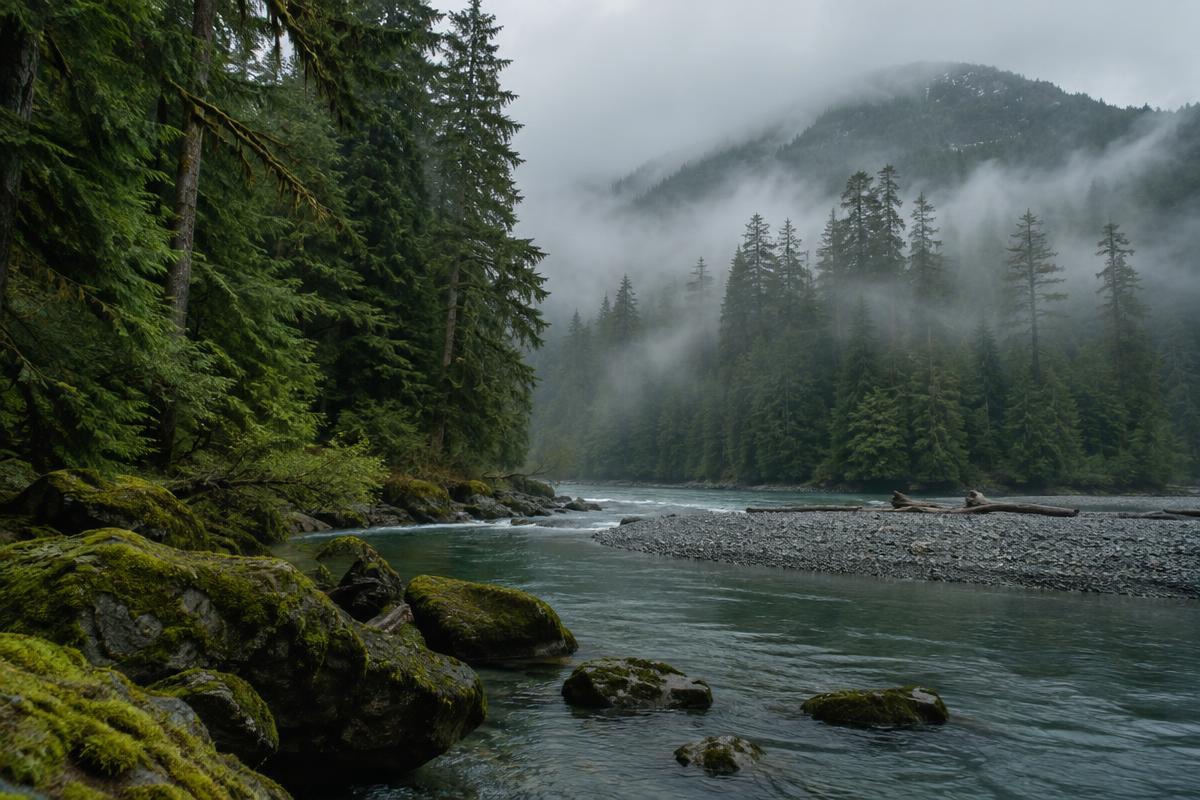
The Pacific Northwest is defined by water falling on mountains. That combination produces some of the most productive coldwater habitat in the contiguous United States, along with a coastline shaped by surf, tide, and storm.
Landscape & Country
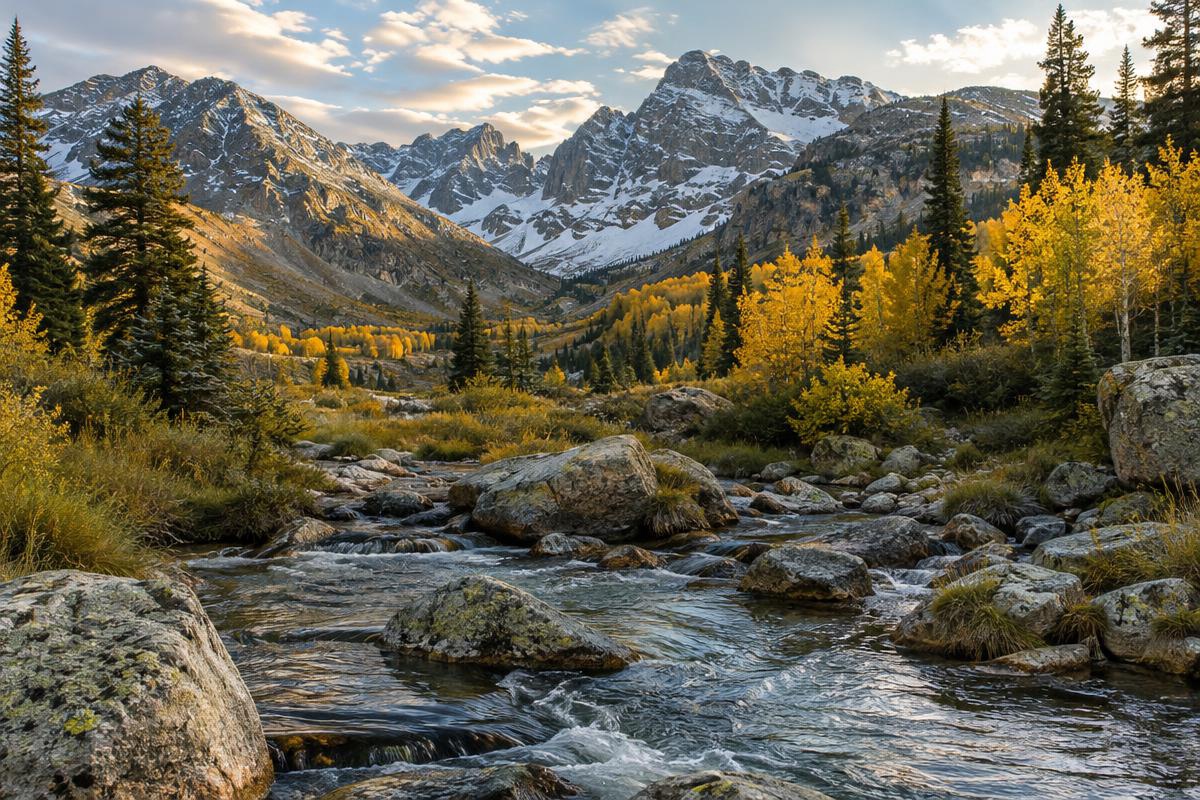
From the Cascade Range west to the Pacific, the region is a series of watersheds separated by ridges. Elevation and rainfall determine everything: west-side drainages run high and cold, while east-side rivers slide through high desert canyon country before joining the Columbia system.
The region also holds the densest remaining old-growth conifer forest in the Lower 48. That forest shades streams, stabilizes banks, and feeds the aquatic food web with the nutrients a healthy river needs.
Fishing Waters Worth Knowing
These entries describe the character of each water. Licensing, seasons, and bag limits are set by the managing state agency and change annually.
Columbia River
Washington & OregonThe defining river of the region, running more than 1,200 miles from the Canadian border to the Pacific. Its reservoirs and tributaries support salmon, steelhead, sturgeon, walleye, and smallmouth bass.
Deschutes River
Central OregonA high-desert river with cold, clear water and outstanding trout and steelhead fishing. Canyon access is limited and seasonal, so plan around established launches and trails.
Puget Sound
Western WashingtonA vast inland saltwater system with strong tidal exchange, salmon runs, and bottomfish. Tides and currents dominate the fishing; the best anglers plan around the tide chart, not the clock.
Snake River
Idaho & WashingtonCanyon water and tailraces holding sturgeon, bass, and trout. Access is often by boat, with public ramps at intervals along the river corridor.
Wildlife
- Roosevelt elk and Rocky Mountain elk
- Black-tailed deer and mule deer
- Black bear and cougar
- Bald eagle and osprey
- Salmon and steelhead runs
Public Recreation Areas
- National forests across the Cascades and Coast Range
- Wilderness areas managed for foot and stock access
- State wildlife areas along major river corridors
- National scenic areas and coastal recreation areas
Conservation Priorities
Salmon recovery is the central conservation story here. Dam passage, floodplain reconnection, riparian restoration, and cold-water refugia work all aim at the same goal: keeping water cold, connected, and clean. Anglers follow closure and gear rules closely because the resource is closely managed and carefully monitored.
Official State Wildlife Resources
Licenses, season dates, bag limits, and access rules are set by each state. These are the agencies responsible for the states in this region.
Alaska
Alaska Department of Fish and Game
California
California Department of Fish and Wildlife
Hawaii
Hawaii Division of Aquatic Resources
Idaho
Idaho Department of Fish and Game
Oregon
Oregon Department of Fish and Wildlife
Washington
Washington Department of Fish and Wildlife
Confirm current requirements directly with each agency before traveling. Regulations differ by water and by unit within a state.