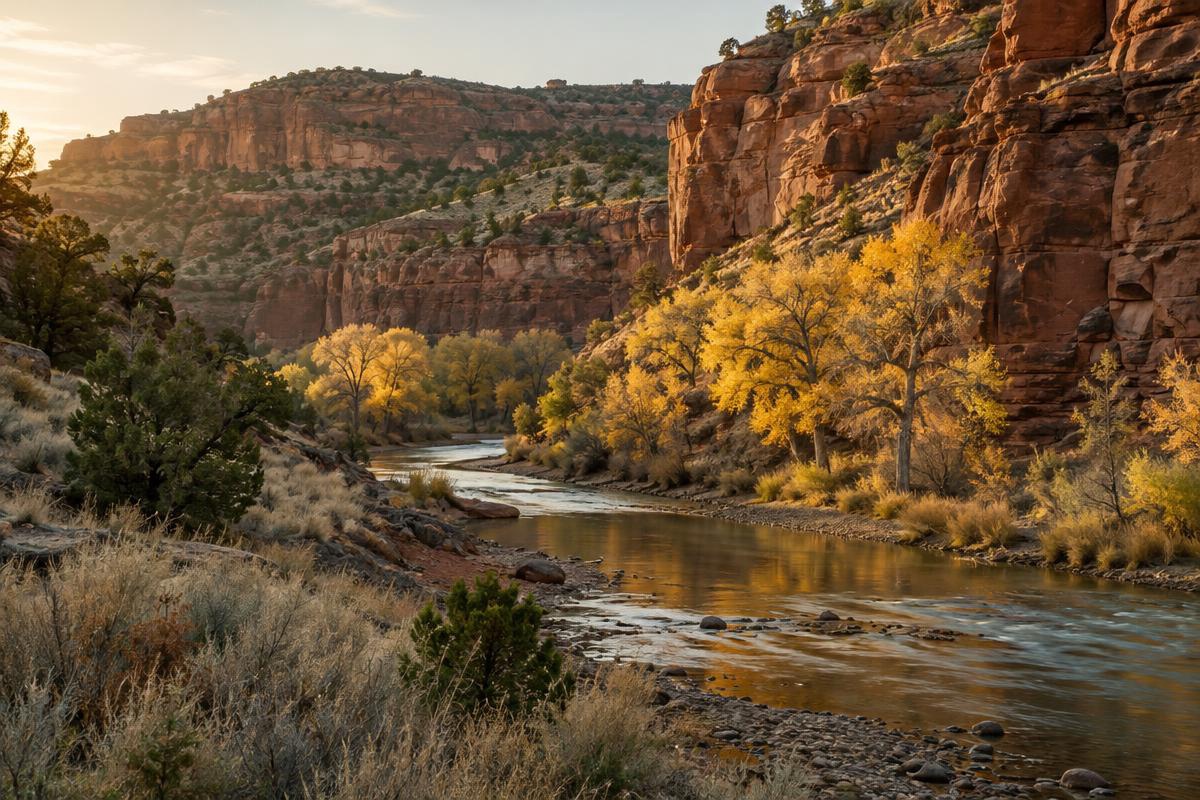
The Southwest is not what most anglers picture, which is exactly why it rewards curiosity. Desert rivers, canyon reservoirs, and high mountain pockets hold fish in places that seem improbable until you see them.
Landscape & Country
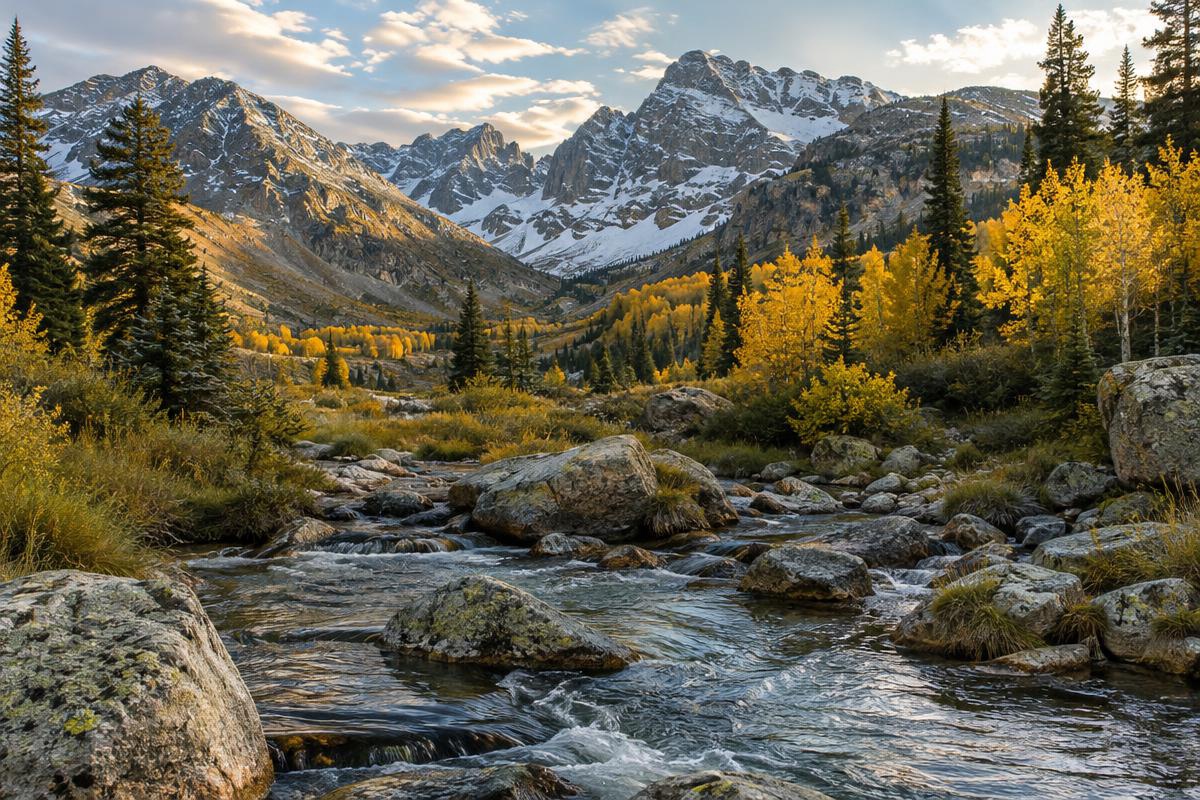
Elevation does most of the work here. A single state may include low desert, mid-elevation grassland, and high conifer forest within two hours of driving. Fish distribution follows that gradient.
Water is scarce and carefully managed. Reservoirs store the year's runoff, and tailraces below dams create coldwater fisheries where none would exist naturally.
Fishing Waters Worth Knowing
These entries describe the character of each water. Licensing, seasons, and bag limits are set by the managing state agency and change annually.
San Juan River
New MexicoA cold tailwater below a dam, with a reputation for dense trout populations and technical, clear-water fishing.
Lake Powell
Utah & ArizonaA vast canyon reservoir with stained water, flooded structure, and strong striped bass and largemouth fisheries.
Rio Grande
New Mexico & TexasA river shaped by irrigation and season. Flows vary dramatically, and access is often through public or conservation easements.
Texas reservoirs
TexasLarge, wind-exposed reservoirs holding bass, catfish, and crappie. Structure and hydrilla beds concentrate fish, and summer heat pushes them deep.
Wildlife
- Coues whitetail and mule deer
- Pronghorn and desert bighorn sheep
- Javelina and mountain lion
- Wild turkey in canyon and mountain habitat
- Numerous quail species
Public Recreation Areas
- National forests and wilderness in high country
- Bureau of Land Management desert lands
- State trust land with access permits in some states
- National recreation areas around major reservoirs
Conservation Priorities
Water is the conservation issue. Riparian corridors support a disproportionate share of wildlife in an arid landscape, and small changes in flow or bank condition have large effects. Native fish recovery in desert rivers is technically demanding and depends on careful management of non-native species.
Official State Wildlife Resources
Licenses, season dates, bag limits, and access rules are set by each state. These are the agencies responsible for the states in this region.
Arizona
Arizona Game and Fish Department
Nevada
Nevada Department of Wildlife
New Mexico
New Mexico Department of Game and Fish
Oklahoma
Oklahoma Department of Wildlife Conservation
Texas
Texas Parks and Wildlife Department
Confirm current requirements directly with each agency before traveling. Regulations differ by water and by unit within a state.