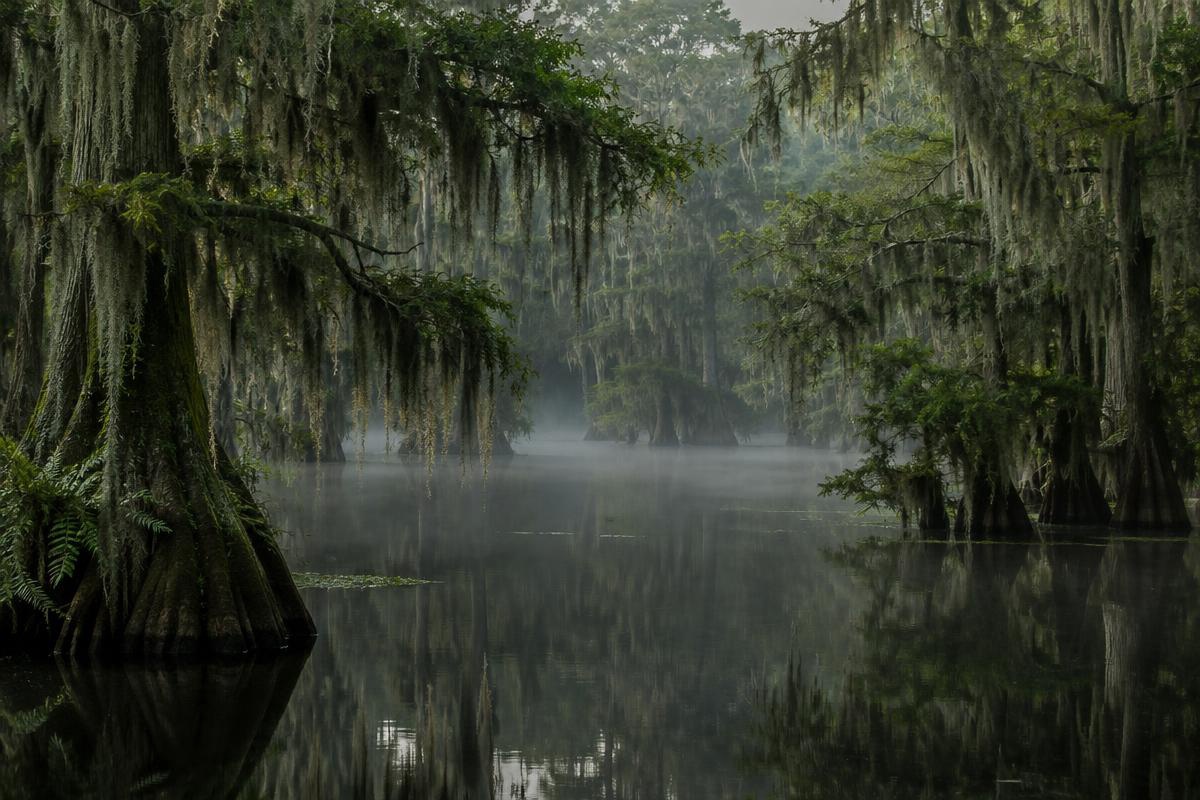
The Southeast is defined by warm water and biological abundance. Reservoirs, blackwater rivers, tidal marshes, and a long coastline support an extraordinary diversity of fish and wildlife.
Landscape & Country
From the Appalachian Mountains to the coastal plain, the region drops through piedmont, sandhills, and floodplain. Each band holds its own fisheries and its own hunting traditions.
Water is everywhere: reservoirs on almost every major river, oxbow lakes in the bottomlands, and estuaries where fresh water meets tide.
Fishing Waters Worth Knowing
These entries describe the character of each water. Licensing, seasons, and bag limits are set by the managing state agency and change annually.
Lake Guntersville
AlabamaA Tennessee River reservoir with extensive aquatic vegetation and a national reputation for largemouth bass.
Everglades & Florida Bay
FloridaVast shallow water with grass flats, mangrove edges, and strong tidal flow. Navigation and seasonal conditions require local knowledge.
Tennessee River system
Tennessee, Alabama, KentuckyA chain of reservoirs and tailraces offering bass, crappie, catfish, and seasonal striped bass runs.
Louisiana marsh
LouisianaProductive coastal marsh with redfish, speckled trout, and largemouth bass. Tides, wind, and land loss shape where fish can be found.
Wildlife
- White-tailed deer
- Wild turkey
- Wild hog in many areas
- Alligator and wading birds
- Waterfowl in coastal and riverine wetlands
Public Recreation Areas
- National forests across the Appalachian and coastal plain
- State wildlife management areas with strong public access
- National wildlife refuges along the coast
- Large reservoir networks with public ramps
Conservation Priorities
Wetland loss and coastal land subsidence are the defining challenges, particularly in Louisiana. Freshwater inflows, marsh restoration, and oyster reef projects all aim at maintaining estuary productivity. Upland habitat work supports deer and turkey populations across the region.
Official State Wildlife Resources
Licenses, season dates, bag limits, and access rules are set by each state. These are the agencies responsible for the states in this region.
Alabama
Alabama Department of Conservation and Natural Resources
Arkansas
Arkansas Game and Fish Commission
Florida
Florida Fish and Wildlife Conservation Commission
Georgia
Georgia Department of Natural Resources
Kentucky
Kentucky Department of Fish and Wildlife Resources
Louisiana
Louisiana Department of Wildlife and Fisheries
Mississippi
Mississippi Department of Wildlife, Fisheries, and Parks
North Carolina
North Carolina Wildlife Resources Commission
South Carolina
South Carolina Department of Natural Resources
Tennessee
Tennessee Wildlife Resources Agency
Confirm current requirements directly with each agency before traveling. Regulations differ by water and by unit within a state.