Why the Driftless Region Has So Many Small Trout Streams
The Driftless Region's unusual geology creates cold, shaded water in places where the surrounding landscape may look anything but mountainous.
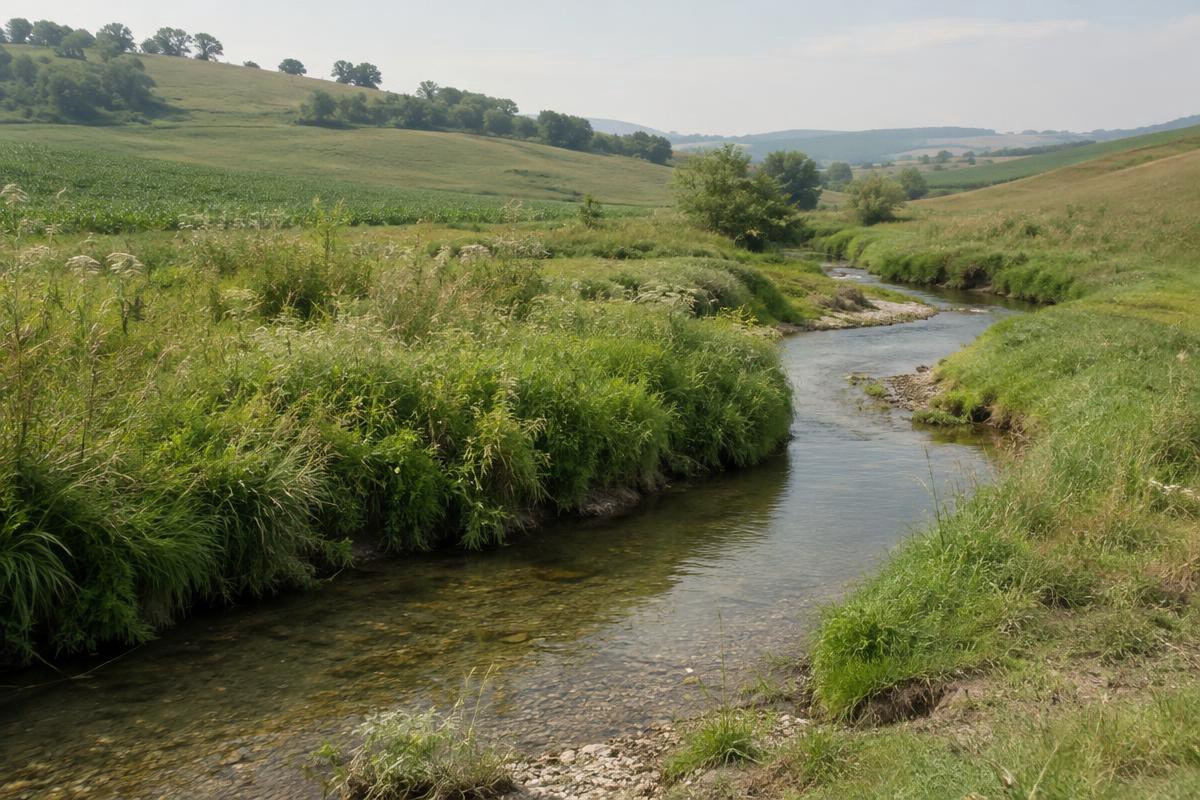
A narrow spring creek winding between grassy bluffs in the Driftless Area
Getting started
Small trout water is among the several notable outdoor features of the Driftless Region, and their existence here is not accidental. Because the Driftless Region was among the areas of continental USA to escape the last great continental glaciers, its landscape of old valleys, ridge tops, and exposed bedrock of overlying sedimentary rocks funnels groundwater through a few channels to form small streams of cold water suitable for trout. Of greatest use to anglers is an assessment of water, shade, banks and access to fish.
Unglaciated ground makes room for narrow valleys
As glaciers carved out the landscape of much of the continental U.S. (and buried others under thousands of feet of ice), the Driftless Region escaped much of this modification. Consequently, the many hills and slopes throughout the Region bear evidence of having been deeply cut by ancient rivers long since bereft of water. Groundwater, in the form of rain, infiltrates the rocky soil and moves through fractures in the limestone and other highly permeable rocks. Eventually, the water emerges on a hillside or in a valley as a spring that feeds a small creek.
As these pieces of habitat are often very separate from each other (even though they flow together to form one creek) a short section of water can include a spot where water of cold groundwater enters the creek from a bank, a deeper pool down stream and even fast current to good oxygen levels in between.
Springs and shade keep water suitable
Cold groundwater flowing into a stream is key to healthy spring fed streams. Stabilize the water, create clear riffles and under cut banks, and be able to support aquatic insects and small fish in different sections of the stream. Even the clearest water can be stressed if too warm or too low.
Trees and stream shade. Different sections of a stream have different characteristics and the trees provide excellent cover for trout and other wildlife. Watch for overhanging branches, good root system in the banks, and downed wood. Look for bare stretches of stream, exposed banks, high amounts of silt, or a blocked spring. Look up and down stream from the affected area to determine if it is a localized problem or if it is a bigger problem affecting a larger area of stream.
What to check before fishing
Just because you can see the water, does not mean that you can fish from the land it passes through. While a creek may run through the public ground of a park-like setting, cross a road corridor, or pass near private property, access to a creek for fishing is often restricted for private property. Check with current official sources, signs, and permission for access to the exact parcel of land where you wish to fish.
Plan your stream fishing trip by first making a map of the stream and then identifying a secondary access point in case the first is blocked by wood or other debris. Wear stout wading shoes that will not fill with water and help you to stay upright on smooth rock or muddy grass. Wear layers of clothing that can be added or removed as needed to offset changes in temperature. Carry a small day pack containing water, first aid kit and any other items you think you may need during the day. Keep dogs under control to prevent disturbance of livestock, nests of birds and fisheries habitat. Be extremely careful not to damage the shallow water areas where trout will spawn and avoid wading though spring outlets.
When a stream warning deserves attention
Look for changes that indicate increased pressure on the trout fishery such as: water temperature rising or flow decreasing and staying low; new sedimentation in the stream; increased erosion of stream banks; excessive algae growth; loss of shade. Be aware of a spring ceasing to flow while the nearby water remains cold and flowing. Do not disturb the site and try to determine the cause(s). If you believe serious pollution or degradation to habitat has occurred report it to the local appropriate body.
A region that consists of so much stream-related beauty begs to be explored. With a careful eye, one can often spot the best trout water in a simple wooded slope, a seep in the bank, or the steady flow of a spring down into the narrow valley of a creek.
A note on regulations
Fishing and hunting rules are set by state and federal agencies and change annually. This article describes general outdoor practice, not current law. Confirm licenses, seasons, limits, and access with the managing agency before you go.